

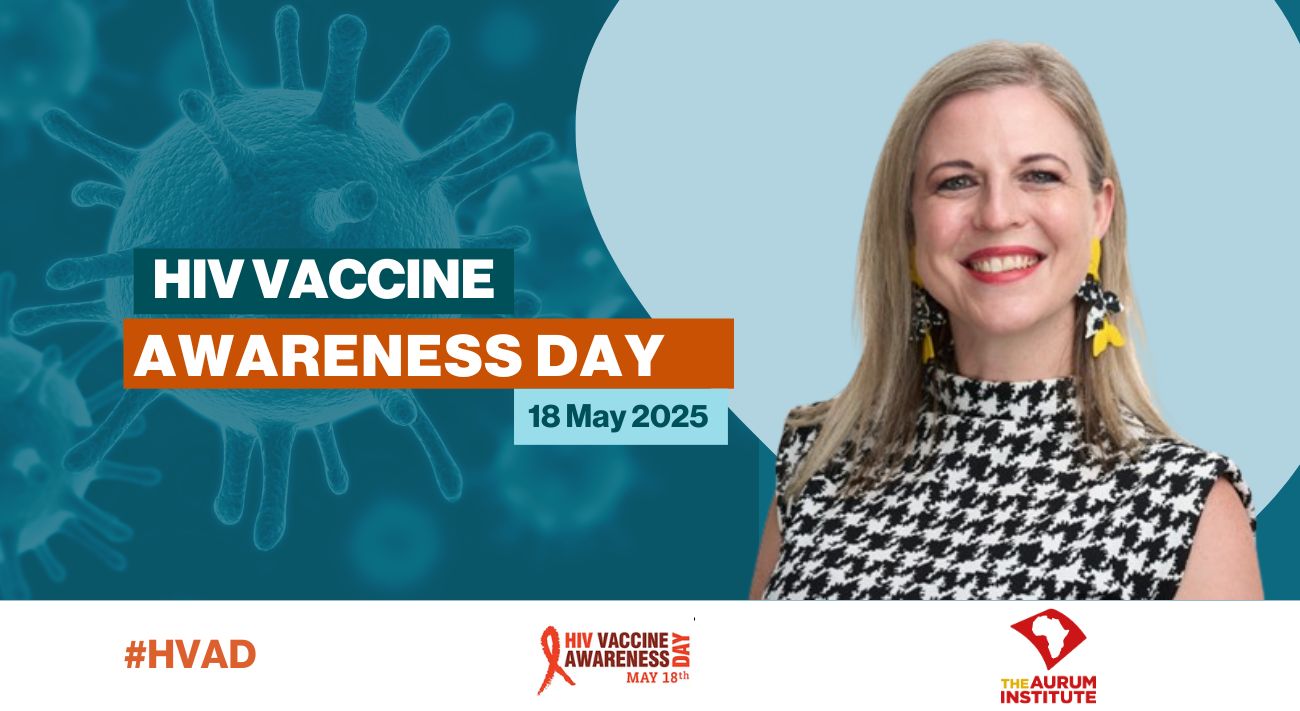
When Tanya Nielson looks back on the start of her journey in HIV research, she paints a picture of quiet conviction and bold leaps into the unknown. It was 2005, and South Africa had just begun its national rollout of antiretroviral therapy (ARVs). Then a young pharmacist at the ARV clinic at Tshepong Hospital, Tanya witnessed first-hand the transformative power of ARVs, patients arriving weak and frail, gradually regained strength, dignity and life.
“You could see the impact medication had on people's lives,” she reflects. "It made me want to be part of a solution that could prevent HIV entirely.”
That opportunity came knocking—literally. A team from the Aurum Institute visited her hospital to speak about a new HIV vaccine trial, which would be hosted in the small town of Klerksdorp, her hometown. “I couldn't believe it. A vaccine trial in my backyard," she remembers. She was inspired and eager to contribute to the trial. A chance encounter revealed that The Aurum Institute (then known as Aurum Health) was hiring a research pharmacist. She applied, got the job, and joined a pioneering team of roughly 16 people who knew little about HIV vaccine clinical trials but shared a sense of mission. Nearly two decades later, Tanya is still with Aurum, now leading the Clinical Research Division—and the journey has been nothing short of transformational.
From the Ground Up
“When we started, our lab didn’t meet trial standards. We had to learn everything: how to calibrate, document, and meet local and international requirements,” Tanya recalls. There were many setbacks—community scepticism, near lab shutdown, monitoring finding and the immense challenge of translating global science into local context. But slowly, brick by brick, they built systems, trained teams, and crucially, earned trust. Today, Aurum operates five fully fledged research sites with laboratories and pharmacies meeting international standards. A licensed HIV vaccine is still on the horizon, Tanya sees every trial as a step forward. “Every study teaches us something new. We've grown—not just as scientists, but as partners and listeners. That's progress.”
Science with a Heartbeat
For Tanya, her personal values and professional path are deeply intertwined. As a lifelong resident of Klerksdorp, she never imagined doing cutting-edge research in her backyard. “To be part of a global effort while serving my community felt like a dream come true,” she says. She believes that scientific success depends not just on data, but on relationships. "You can't conduct a trial without community trust,” she explains. “When we started, people worried about being used as guinea pigs. We had to show up, listen, and include them in the process.” Today, co-creation is embedded in Aurum's ethos – through Community Advisory Boards assisting with protocol and informed consent reviews in plain language, and direct partnerships with stakeholders like nurses and other healthcare workers, civil society, and health departments.

Truth in a Time of Misinformation
As science edges closer to an effective HIV vaccine, new challenges emerge. “We’re fighting on many fronts - misinformation, anti-vaccine sentiment, and shrinking funding. But we can’t afford to stop now. We’re closer than ever.” Tanya says She believes consistent, fact-based, human-centred communication is vital.
“Truth has to travel faster than lies. That means we must keep telling our fact-based stories—in clinics, churches, taxis, homes, and even WhatsApp groups. People trust people they know”
Expanding the Toolbox
Tanya remains optimistic about the future – not just because of the promise of vaccines, but also because of new options like Lenacapavir, a twice-yearly injection for HIV prevention. "It’s not a vaccine, but it’s a game changer. Not everyone wants the same thing—some people prefer injections; others want pills. The key is choice. More options mean more access, and more lives protected.”
It Takes a Village—and a Vision
Reflecting on the past two decades, Tanya sees a tapestry of collective effort: scientists, community leaders, healthcare workers, volunteers, policymakers—all moving toward a common goal.
“It takes a village—but also vision, stamina, and the belief that we can end this epidemic. Even when the finish line shifts, we keep moving forward.”
As we mark HIV Vaccine Awareness Day, Tanya Nielson’s story is a powerful reminder that behind every scientific advance is a network of committed people—guided by purpose, grounded in community, and determined to make HIV history.