


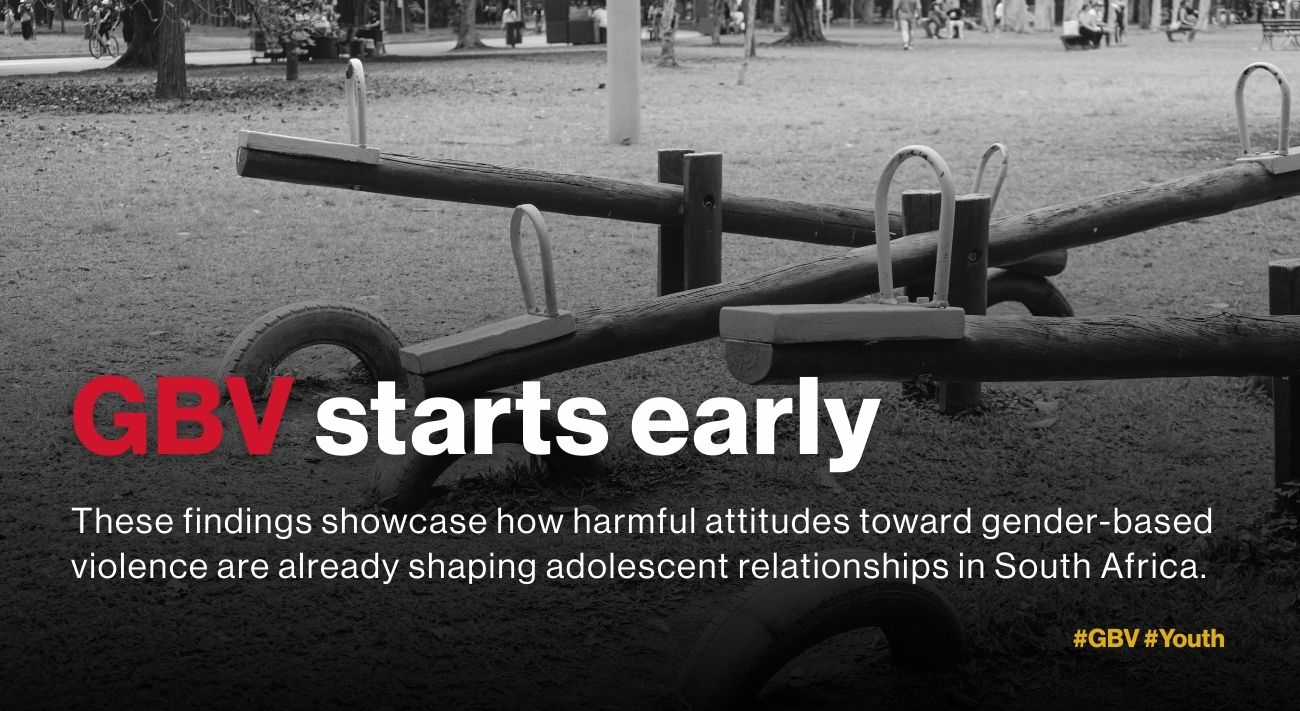
Gender-based violence (GBV) remains one of South Africa’s most urgent public heath challenges. New research out of Aurum’s Clinical Research division sheds light on how harmful attitudes toward GBV are already shaping the lives and relationships of adolescents.
Conducted in Rustenburg, this mixed-methods study explored adolescents’ attitudes toward GBV and how these attitudes intersect with sexual behaviour and vulnerability to HIV. By combining survey data with community-based discussions, the research provides both evidence and context, revealing how violence is often understood as a normal part of relationships.
What the study found
The study found that a substantial proportion of adolescents held permissive attitudes toward gender-based violence, meaning violence was seen as acceptable in certain situations. Importantly, these attitudes were also linked to sexual health risk. Adolescents who held permissive views toward GBV were more likely to report being sexually active and to be in relationships characterised by unequal power, factors that limit young people’s ability to negotiate consent and protection. These dynamics increase vulnerability to HIV, particularly for adolescent girls and young women.
Qualitative findings revealed that controlling behaviour, verbal abuse and unequal relationships are often not recognised as abuse. Instead, they are shaped by what young people see at home, economic dependence, and community gender norms.
Community insight from Rustenburg
Community engagement played a central role in this research. Initial conversations about GBV were met with hesitation, discomfort and silence. Over time, as trust was built, it became clear that experiences of violence were common but rarely spoken about.
Community engagement highlighted how GBV is normalised through family dynamics, poverty and alcohol use. Many young people blamed themselves for abusive experiences and were uncertain about where to seek help, reflecting limited trust in reporting systems and fear of stigma.
These same power imbalances often extended into sexual relationships, where young people described having little control over decisions about sex, partner choice, or protection.
Early prevention matters
When gender-based violence is normalised in adolescence, it directly shapes sexual decision-making, relationship power, and long-term sexual health outcomes. These findings reinforce the need for early, community-led and gender-transformative approaches to GBV prevention. Creating safe spaces for dialogue, strengthening youth-friendly support services and involving boys and young men are critical to breaking cycles of violence.
Addressing GBV early is therefore essential not only to prevent violence, but to protect young people’s sexual and reproductive health. Through its Clinical Research division, Aurum continues to generate evidence that connects research to real-world impact centred on the voices and experiences of communities.
Read the full publication here: https://link.springer.com/article/10.1007/s10461-025-05011-3